
Suppose you are planning your investment strategy and want to add an international flavour to it, only to realise that you can no longer suddenly enter the international market.
This is precisely what occurred to millions of Indian investors. The global mutual fund access to Indians has been a challenge since February 2022, and investors are left asking why and what to do next.
In case you have been scratching your head around this, you are not alone.
The Core Problem: Why Global Mutual Fund Access Got Restricted?
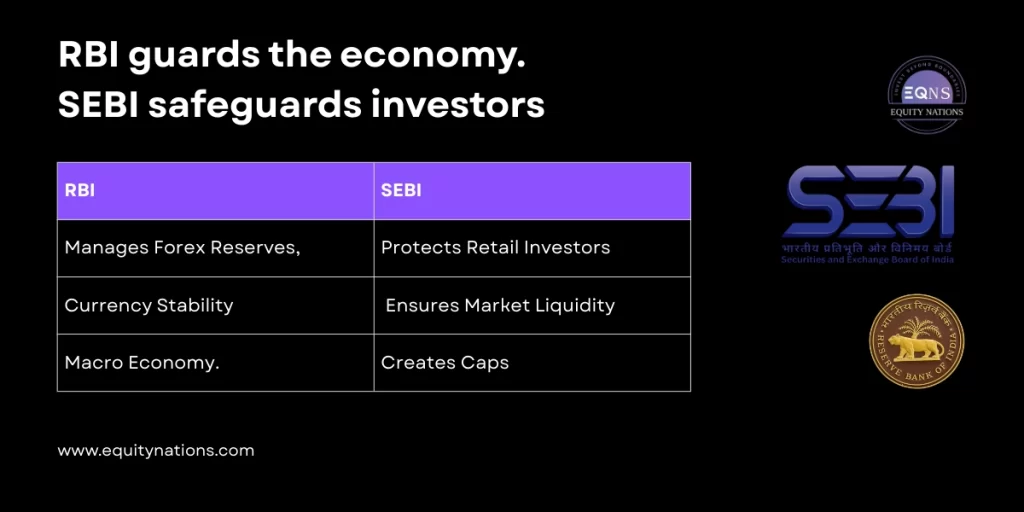
The primary cause of the loss of global mutual fund access by Indians is the reduced regulatory boundaries created by the Reserve Bank of India (RBI) and implemented by SEBI.
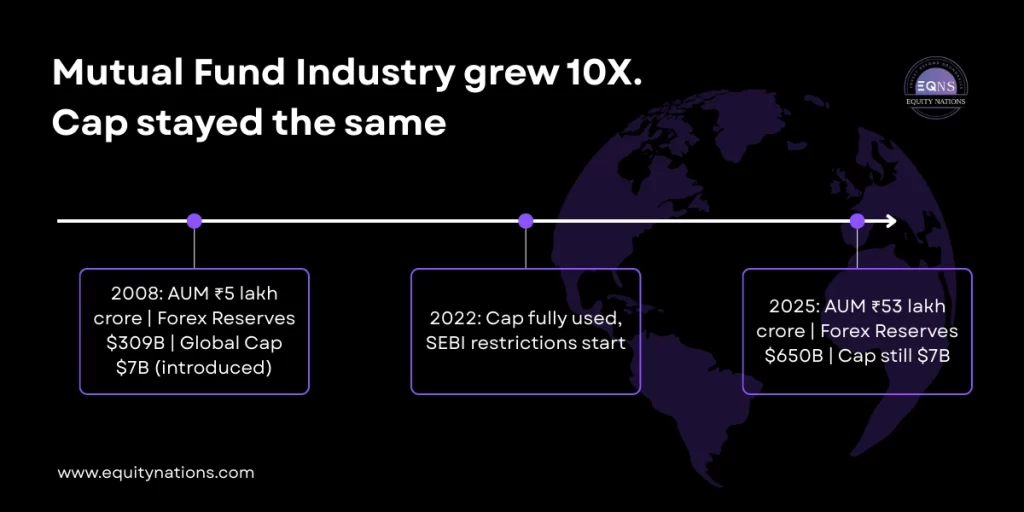
In 2008, the RBI had capped the total investments of the Indian mutual fund industry abroad to $7 billion. The overseas ETFs increased by an additional $1 billion. The individual mutual fund companies were allowed to invest a maximum of $1 billion in foreign countries.
These numbers were reasonable then; the Assets Under Management (AUM) of the industry were only approximately Rs 5 lakh crore, and India had forex reserves of approximately $309 billion.
Jumping into the present time: the industry has handled more than Rs 53 lakh crore, and forex reserves have already surpassed $650 billion. However, these caps have not altered over the last 15 years.
As of February 2022, the limit of 7 billion dollars was hit. SEBI halted all subsequent investments in foreign securities. That implied no new lump sum investments, SIPs, or moves into international funds. Investors effectively lost easy global mutual fund access overnight.
Why Did SEBI Put a $7 Billion Cap on Global Mutual Fund Investments?
At Equity Nations, we often get this question from investors: “Why exactly did SEBI decide on a $7 billion limit?” Let’s break it down simply.
Back in 2008, India’s mutual fund industry was much smaller than it is today. The total assets under management (AUM) were around ₹5 lakh crore, and our foreign exchange reserves stood close to $300 billion. At that time, regulators wanted to make sure Indian money didn’t flow out in huge amounts and put pressure on our currency or foreign reserves.
SEBI, working closely with the RBI, set a safeguard. They said:
The entire mutual fund industry can only invest up to $7 billion overseas.
Each fund house can put a maximum of $1 billion abroad.
The idea was simple: protect India’s forex reserves, prevent sudden capital outflows, and keep domestic liquidity strong so that Indian markets could continue to grow. It was also about protecting investors. Global markets bring risks like currency swings and volatility. SEBI wanted to ensure Indian investors dipped their toes into global investing gradually, without overexposure.
That was a sensible move then. But fast-forward to today, our forex reserves have doubled, and the mutual fund industry is ten times bigger. Many experts now believe this old limit is outdated and needs a fresh look.
At Equity Nations, we see this as a classic case of a policy that made sense in the past but doesn’t fully reflect India’s current financial strength.
How This Impacted Indian Retail Investors?
The limitation had a domino effect:
- 26 of 69 international funds were partly closed.
- Large Mutual funds, such as Franklin Templeton, ICICI Prudential, Motilal Oswal, and Edelweiss, held fresh inflows.
- In April 2024, SEBI imposed restrictions on ETFs, preventing subscriptions to ETFs when the $1 billion limit was almost exceeded.
Even the existing investors were pinched. An example is the Edelweiss Mutual Fund, which restricted a subscription of Rs 1 lakh per PAN per day on international funds. Some plans cut their overseas budget in order to remain within limits.
In short, global mutual fund access was drastically reduced both to new and existing investors.
Expert Views on Global Mutual Fund Access Restrictions
The leaders in the industry have been vocal regarding the relaxation of restrictions:
- At the Moneycontrol Mutual Fund Summit 2025, Kalpen Parekh, MD & CEO of DSP Mutual Fund, said, The global space can be used to give returns to investors, although the boundaries are currently closed. He stressed that SEBI was collaborating with RBI to relax these restrictions.
- The MD of Kotak mutual fund noted the difference: The RBI permits investment overseas by individuals using LRS and family offices, but the mutual fund money faces stricter limits.
- Radhika Gupta, MD and CEO of Edelweiss AMC, observed that opening this limit will not be risky since these funds constitute a minor portion of the overall portfolios. This will be beneficial only to investors.
- Neil Parikh, CEO of PPFAS Mutual Fund, pointed out the ridiculousness: 7 billion dollars to the people of India equates to 7 dollars per head of population since 2007! LRS, meanwhile, permits $250,000/person/year.
- Pratik Oswal, the Head of Passive Funds, Motilal Oswal AMC, supports the notion of gradual increases, as mutual funds are more transparent than direct investments abroad.
What Are The Alternative Ways to Gain Global Mutual Fund Access?
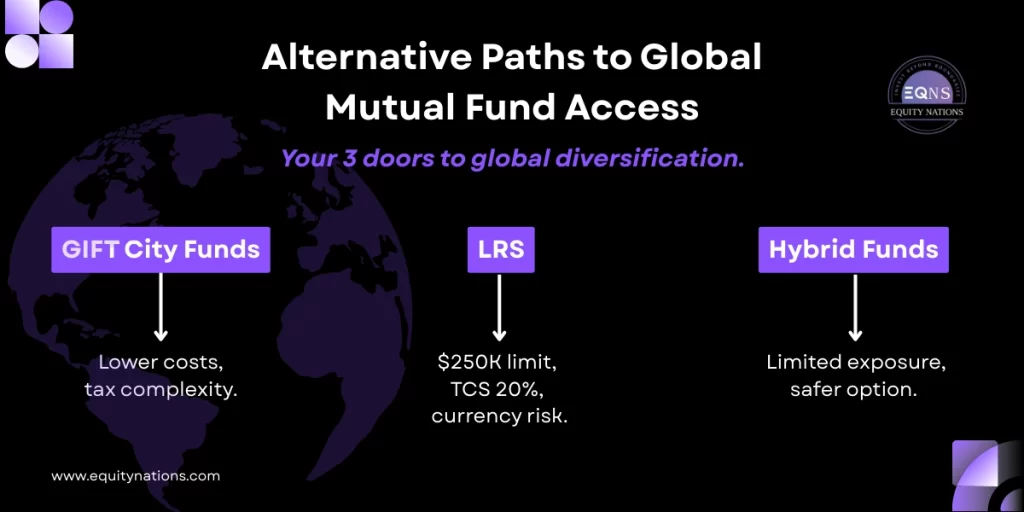
Although we have limited alternatives to invest in Global Mutual Funds, here are some of the best ways for Indian investors who choose to invest –
GIFT City: A New Pathway for Global Mutual Fund Access
Gujarat International Finance Tec-City (GIFT City) has become an answer to this. Here, DSP became the first offshore fund to have a retail orientation, the DSP Global Equity Fund.
Advantages of Investing from Gift City:
- No Securities Transaction Tax (STT), Commodity Transaction Tax (CTT), or stamp duty
- Minimum investment of $5,000, top-ups from $500.
Drawback: Taxation is complicated and is considered to be an offshore income even when investing from India.
Liberalised Remittance Scheme (LRS)
LRS allows up to $250,000 per person annually in overseas markets. It’s direct global mutual fund access, but comes with downsides:
- 20% TCS for remittances above Rs 7 lakh
- Higher transaction costs and forex charges
- Complex tax compliance. You can understand the taxation on Foreign Investments here.
Investors using LRS also face currency fluctuation risks. For example, a sudden rupee depreciation can reduce returns, making careful planning essential.
Hybrid & Multi-Asset Funds
Some domestic mutual funds maintain partial global mutual fund access by combining Indian and international securities. Funds like Parag Parikh Flexi Cap and DSP Value Fund offer limited international exposure while complying with regulatory caps.
These funds are ideal for conservative investors who want some global exposure without fully venturing into offshore funds.
International ETFs
Existing ETFs still trade on exchanges but can’t issue new units, often trading at premiums. This makes global mutual fund access through ETFs expensive and inefficient. Yet, for experienced investors, these ETFs can serve as tactical tools for short-term global exposure.
Consult Equity Nations PMS Experts
At Equity Nations, we assist our clients in planning their investment in global markets like Stocks, Mutual Funds, and ETFs, following the right methods. We offer strategic consultation to plan your foreign investment opportunities. Consult Equity Nations PMS Experts Now.
What is The Future of Global Mutual Fund Access for Indian Investors?
As discussed earlier, there are some discussions between the RBI & SEBI to ease the limitations imposed, considering the progress in the investment markets.
- SEBI and RBI are discussing easing entry for foreign investors and reviewing overseas investment limits.
- In September 2025, over 200 global asset managers were consulted about making Indian markets more accessible.
- SEBI introduced frameworks allowing Indian funds to invest in overseas funds with Indian securities exposure, capped at 25% of net assets, partially restoring global mutual fund access.
Experts continue to advocate for higher limits, citing India’s stronger economy and forex reserves. The industry argues that raising global mutual fund access thresholds is justified as AUM has jumped from Rs 5 lakh crore in 2008 to over Rs 53 lakh crore today.
Practical Tips for Investors Navigating the Current Scenario
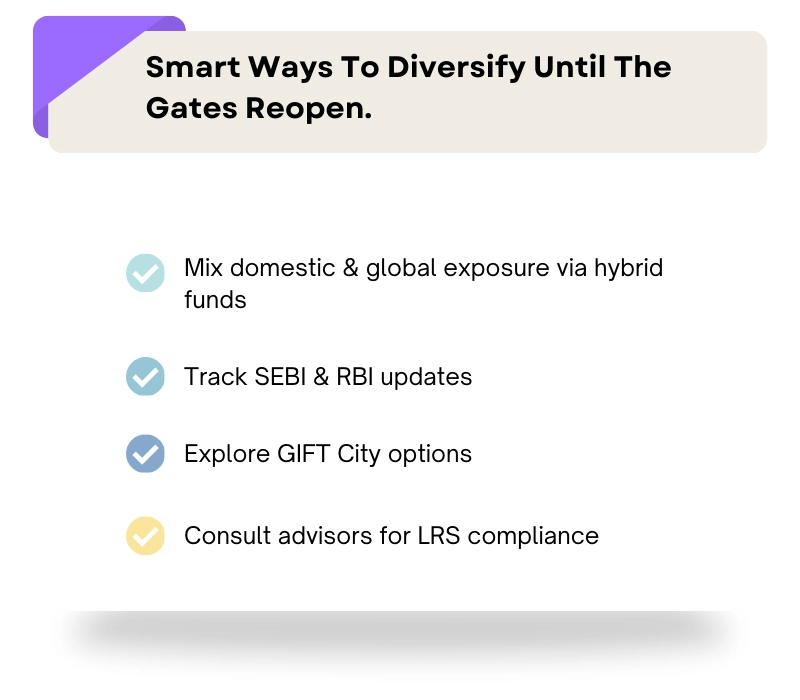
 Mix Domestic and Global Exposure: Use hybrid funds and small allocations via GIFT City funds to maintain some international diversification.
- Track Regulatory Updates: SEBI and RBI announcements can signal changes in global mutual fund access, enabling timely adjustments.
- Diversify Risk: Combine equity, debt, and hybrid strategies to reduce dependency on restricted international investments.
- Leverage Expert Advice: Consulting financial advisors helps navigate LRS, taxation, and ETF options effectively. You can choose to consult Equity Nations for strategic global investment solutions.
 Mix Domestic and Global Exposure:
Kalpen Parekh advises: “Even a small slice of global allocation can improve risk-adjusted returns and reduce portfolio volatility over the long term.
Final Thoughts: Navigating Restricted Global Mutual Fund Access
The altered limits to invest in the Global Markets for Indian retail investors were genuine. Considering the 2008 recession period, the RBI wanted to bring control over the risk suffered by Indian investors & Global Outflow. Though the entire scenario has been changed, now experts are recommending that the RBI work on the investment limitations.
Losing full global mutual fund access was a setback for Indian investors, but it’s not the end.
- Regulatory caps protect the macroeconomy but create scarcity.
- GIFT City, LRS, and hybrid funds provide partial solutions.
- Industry advocacy and India’s stronger economic position may eventually restore broader global mutual fund access.
For now, investors need patience, careful planning, and strategic use of available avenues. Global diversification still matters; it just requires a little more navigation than before.
With economic growth, increasing AUM, and ongoing discussions between SEBI and RBI, the future of global mutual fund access looks promising. Investors who stay informed and proactive will be ready to seize opportunities once these doors reopen.