Thematic Investment in US Stocks: A Simple Guide
If you had bet on the electric cars instead of just random auto stocks a few years ago, your portfolio would have looked very different now.
That’s the power of thematic investment in the US stocks. It’s not about chasing every company, it’s about spotting big ideas like clean energy, artificial intelligence, or space exploration, and backing them early.
Investors who caught on to these themes didn’t just invest in businesses; they invested in the future. And now, thematic investing is becoming one of the fastest-growing ways to put money to work in the US stock market.
In this blog, we will break down what thematic investing is, why it matters today, how it works with US stocks, and how you can use it safely.
What is Thematic Investing? Introducing You To Right Investing
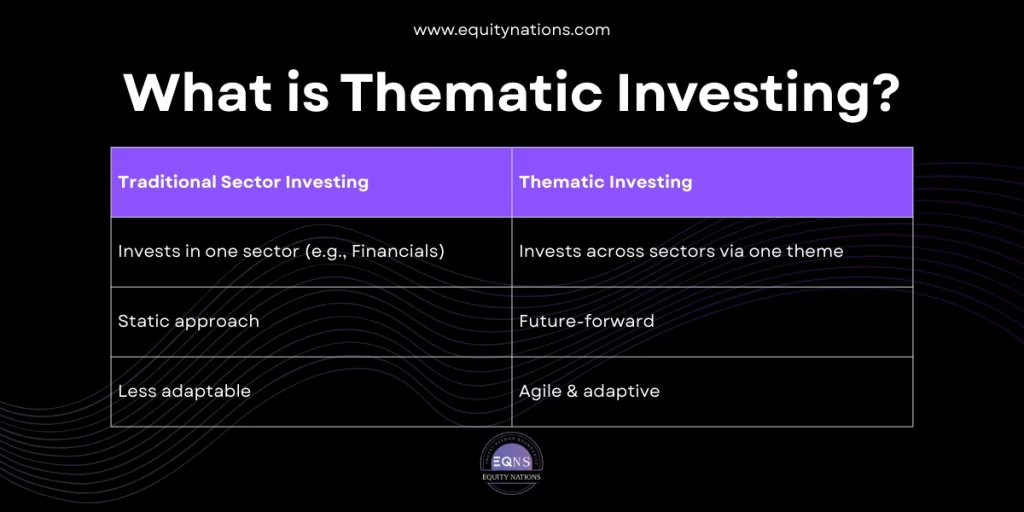
Thematic investing, explained by MSCI, involves building a portfolio around trends that span multiple industries.
Instead of asking “Which sector will grow?” you ask “What big changes will be shaping the future?”.
For example, if you believe electric vehicles are the future, you can invest in companies that are involved in batteries, semiconductors, car manufacturing, and even charging networks. They may belong to different industries, but together they share a common theme.
This is different from traditional sector investing. Sector investing puts you in one box, say, “financials.” Thematic investing is much more flexible and forward-looking.
A thematic index is often created to track these themes. It combines stocks from multiple industries that fit the chosen narrative. Investors can then access the index through exchange-traded funds (ETFs).
Why Thematic Investing Matters in 2025 for US Stock Investment?
Themes are not new, but in 2025, they matter more than ever. The big changes in technology, policy, and geopolitics are shaping markets more than before. Artificial intelligence is transforming everything from chips to cloud software. Moreover, clean energy is boosted by government incentives as well as climate goals. Defence and cybersecurity are in focus because of global conflicts and rising tensions.
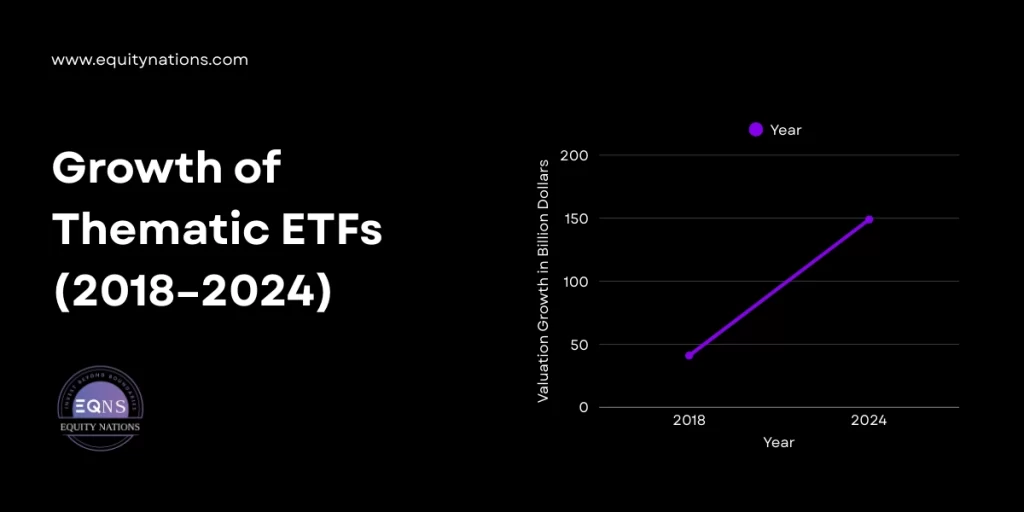
Data backs this up – According to Morningstar’s thematic investing report, assets in US-listed thematic ETFs rose to nearly $149 billion in 2024, up from about $41 billion in 2018. That is more than three times the growth in just six years.
But not all the themes have been winners. Some, like metaverse ETFs, lost traction as the hype cooled. This shows how important it is to tell the difference between long-term structural changes and passing trends.
How Thematic Investing Helps US Stock Investors?
The main attraction of thematic investing in US stocks is the chance to catch long-term growth early.
If you believe AI will dominate the next decade, you can buy a theme ETF instead of guessing which single company will win. That spreads the risk while still giving exposure to the trend.
Another benefit is that the themes connect different sectors. For example, a “future of healthcare” theme could include biotech firms, AI diagnostics companies, and digital health platforms. That cross-sector approach gives much broader exposure than buying a single sector ETF.
For individual investors, thematic investment strategies are easier than building a custom portfolio of 20 stocks. Thematic ETFs, as well as indices, are packaged products. They save research time while still giving you focused exposure.
The best way to use thematic investing is as a secondary plan. You can keep your main strategy broad with things like the S&P 500 or a total market fund. You can then add small pieces of themes that you really care about. This gives your stock some extra room to grow without putting the whole thing at risk.
Risks Associated With Global Thematic Investing Strategy
Like any strategy, thematic investment in US stocks has risks.
- The first is concentration. A theme may rely on a few stocks or industries. If they drop, the whole fund falls.
- The second is hype. Some themes get overvalued because everyone rushes in. Prices rise far beyond the fundamentals, and when the excitement fades, losses can be heavy. The metaverse is one recent example.
- Third is the life cycle of themes. Some trends last for decades, like the internet. Others burn out quickly. Picking the right themes is hard.
There Are Also Practical Risks With Thematic Investing
Many thematic ETFs charge higher fees compared to plain index funds. Liquidity can be low, resulting in higher trading costs.
Financial Times research on thematic ETFs in 2024 showed that only about one in five thematic ETFs outperformed the S&P 500 over five years. That means most underperform broad market indexes.
How to Choose Themes and Products While Investing in US Stocks?
Here is a plan you can use to try buying U.S. stocks based on themes.
First, determine if the trend is permanent and will persist for an extended period. Infrastructure, clean energy, and artificial intelligence are all backed by policy and the economy. That makes them better than themes that are based on just hype.
Next, look at the item. Check out the company that made the ETF or index. Funds from larger companies, such as iShares, BlackRock, or Global X, are often easier to obtain. Look at the thematic index that’s behind it. What kind of businesses are included? How often does it change? Should you invest in them or should you wait?
Also, look at the costs. Many times, the expense ratios for theme ETFs are higher. You should think about the difference between paying 0.7% a year and getting an S&P 500 ETF for 0.05%.
Finally, make rules for yourself. Cut down on the amount of your portfolio that is themed. A lot of experts say 5–15%. Every once or twice in a year, make sure that no theme gets too big.
Practical Playbook for Thematic Investment in US Stocks: From Equity Nations Experts
 Let us put this together into a simple plan.
- Build your core portfolio first with a US index fund like the S&P 500. This gives you stability.
- Pick one or two themes that you understand. For example, AI and clean energy. Add them through the thematic ETFs. Keep the exposure small, say 10% of your total portfolio.
- If you want, you can add one or two individual US stocks linked to the theme. Nvidia for AI, or NextEra Energy for clean power, are common examples. This is optional as well as riskier.
- Set the rebalancing rules. For example, review allocations like every six months. And trim the exposure if one theme grows too much.
- Track performance versus the broad market. If the theme keeps on underperforming, reconsider.
This way, thematic investment strategies become a supplement, not the main course.
Why Thematic Investment in US Stocks Matters Now?
Thematic investment in US stocks gives investors a way to align money with powerful, long-term changes like AI, clean energy, and defense. But the numbers are clear: most theme funds don’t do as well as the market as a whole, and it can be expensive to follow the latest trends. So, the themes should be used in addition to a good portfolio.
If you want to explore themes thoughtfully, start small, pick ideas with lasting drivers, and use well-researched ETFs. For deeper guidance on structuring your portfolio, platforms like Equity Nations share insights that help investors think beyond short-term noise.
If you are planning to start investing in US or Global stocks from India, learn more about opening a trading account with us by contacting us using the chatbot.
Frequently Asked Questions on Thematic Investments
Is thematic investing good for beginners?
Yes, but not too much. For starters, it’s best to keep most of their money in broad funds and use themes to learn and grow.
How much should I invest in themes?
Most advisors suggest 5-20% of your total stock portfolio. The exact amount depends on your risk tolerance.
Do themes beat the S&P 500?
Not all the time. Research has shown that over the course of five years, theme ETFs do much worse than other ETFs. And many people lose, but some win big.
How do I know if a theme is real or hype?
Look for structural factors such as the rules, population changes, or long-term demand. And be careful if a theme is just a bunch of buzzwords.